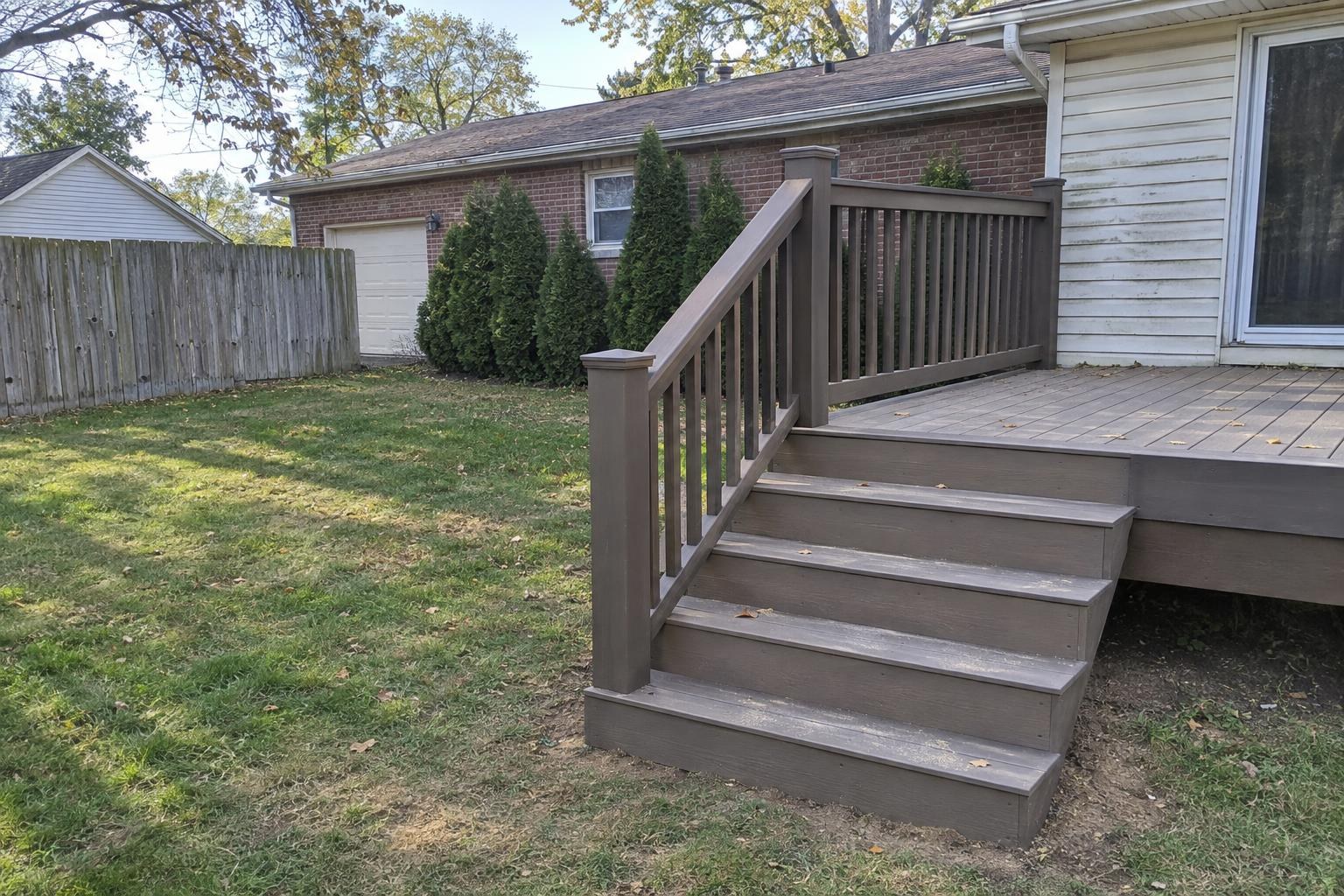
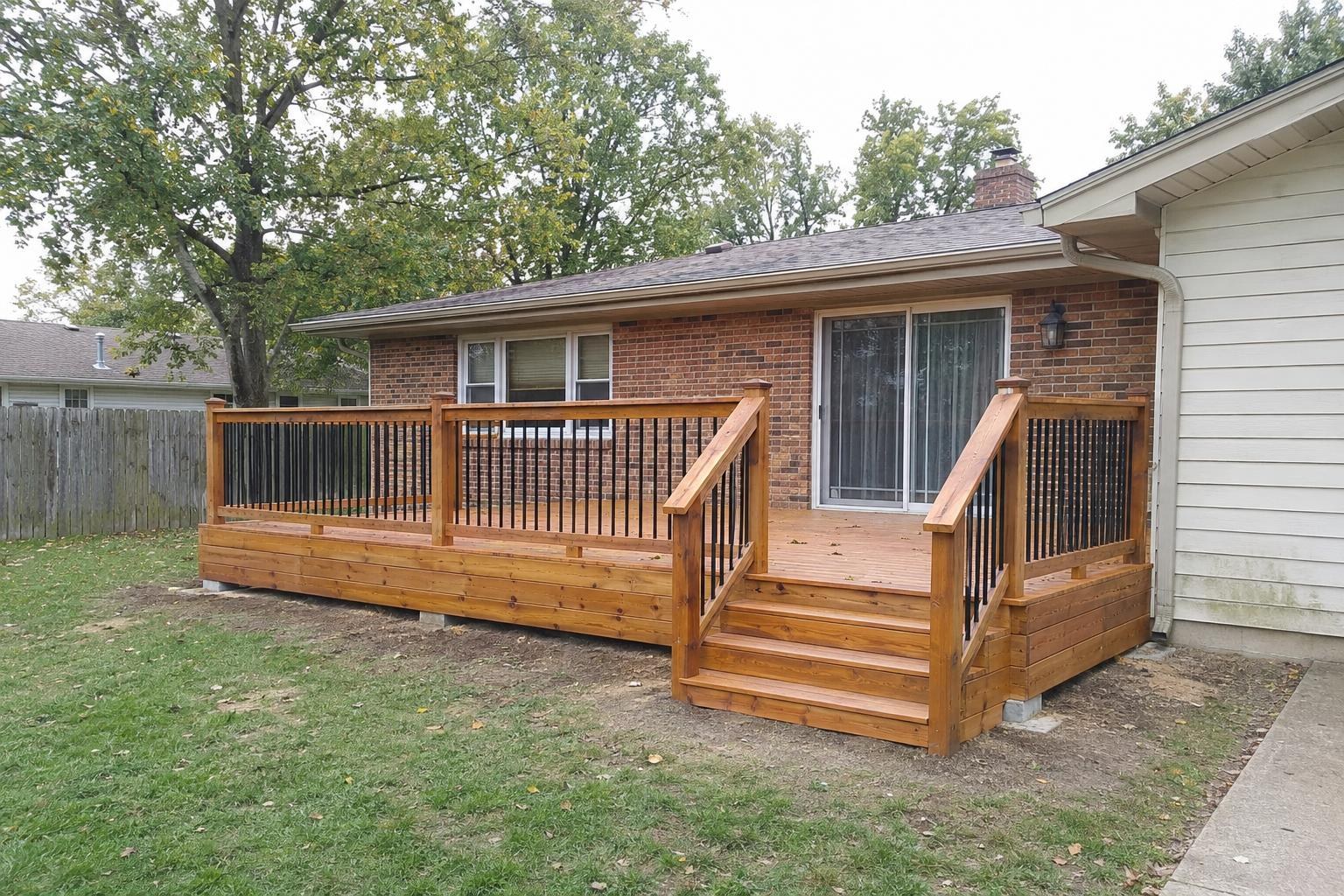
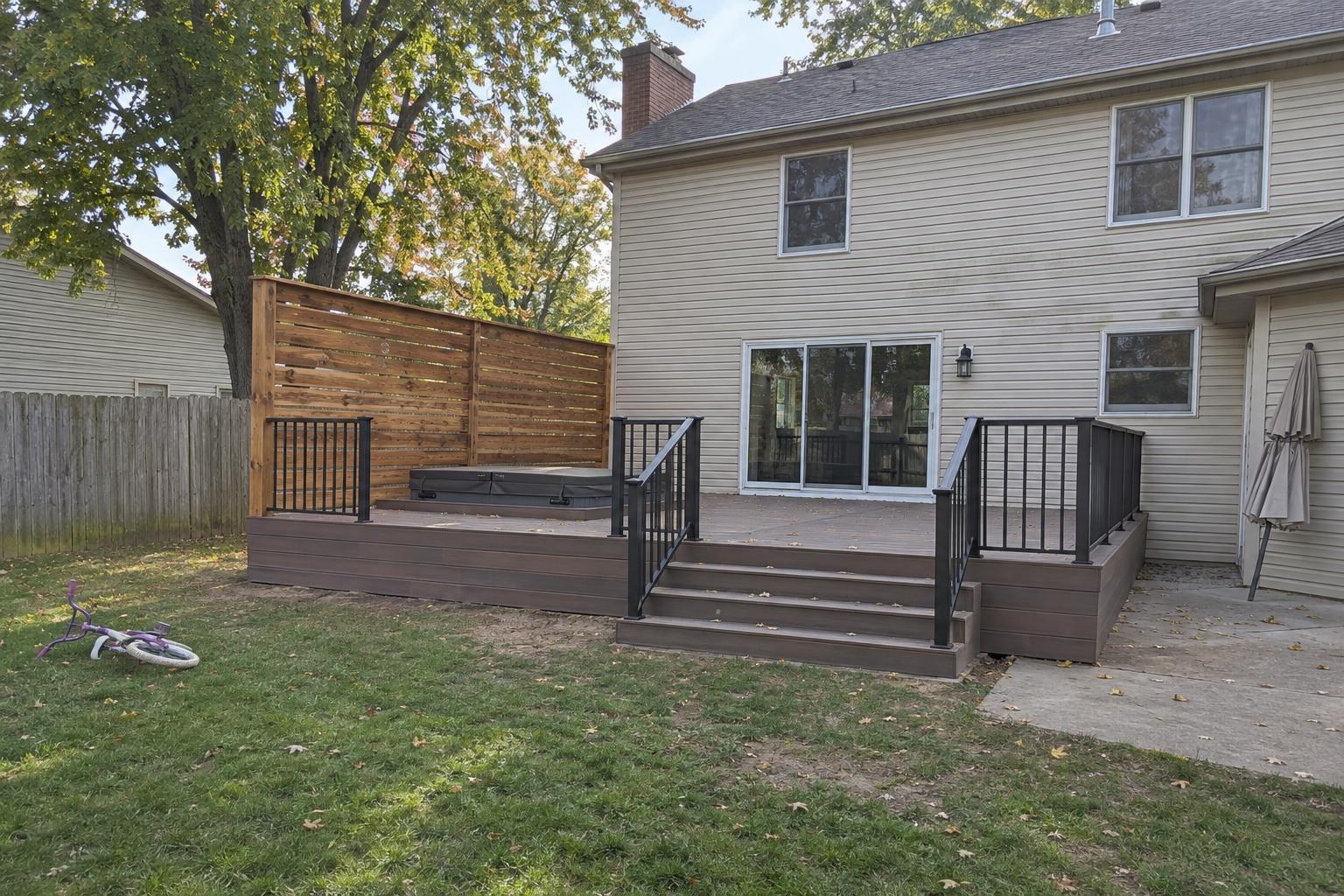
Every job below is one we do ourselves across Streamwood.
We set posts on concrete footings poured below the frost line, 42 inches here in northern Illinois, so the deck doesn't heave when the ground freezes. Framing goes together with joist hangers rated for whatever lumber you choose, pressure-treated pine or cedar. We can build single-level platforms or multi-tier decks with stairs.
We'll walk your yard and talk through how you actually use the space before drawing anything. Built-in seating, a shade structure, a dedicated spot for a grill, that gets planned into the framing instead of bolted on after. You get a layout drawn to scale before any lumber gets ordered.
Soft or spongy boards, railings with play in them, stairs that feel off, we fix those without rebuilding the whole deck most of the time. Rot almost always starts at the ledger board or wherever water sits against end grain. We replace what's actually failed and leave the rest alone.
UV turns bare wood gray and brittle within a season or two out here. We pressure wash, let the boards dry fully, then apply a stain and sealant rated for Illinois freeze-thaw cycles. Doing this every two to three years is what keeps a wood deck from needing new boards.
Trex and TimberTech boards don't need staining and they shrug off the salt that tracks off your shoes in winter. We still frame underneath with real lumber or steel, and we leave the gap spec the manufacturer calls for so the boards have room to expand in July heat. It costs more upfront than pressure-treated, and most homeowners tell us it's worth it.
Baluster spacing has to pass a 4-inch sphere test under code, and a lot of older decks don't meet it anymore. We rebuild railings to spec and anchor posts into the framing, not just toe-screwed into the decking. A railing that wiggles is almost always a post that was never through-bolted.
Sometimes it's not the whole deck, just a handful of boards that cupped, split or rotted out. We match the species and width as close as we can and screw down instead of nail, since nails back out over a few freeze-thaw cycles.
Old decks come down fast, usually a day or two depending on size. We haul the lumber off instead of leaving it for you to deal with, and we check the footings underneath before deciding whether they're worth reusing.
This is the part you don't see once the boards go down, and it's where most failures actually start. We check joist spacing, hanger condition and ledger board attachment on anything we're asked to look at, and we've found plenty of decks held up mostly by luck.
A pergola or a solid cover changes how much you use a deck in July, it cuts the direct sun without blocking the space off. We frame these into the existing deck structure or set separate posts and footings, depending on what the deck can handle.
Four steps, and no surprises in any of them.
You tell us what you want doing, we look at what is actually there, and we ask the awkward questions early.
In writing, itemised, free. If something might add cost later we flag it now rather than at the end.
Same crew throughout. We cover your floors, keep the dust down and tidy up before we leave each day.
You point out anything you are not happy with and we fix it before the invoice, not after.
Deck crews dispatched throughout these communities.
What to know once a deck project is underway.
Describe the problem and we will tell you what it probably is. No obligation.